creatorsinsight_suporte0825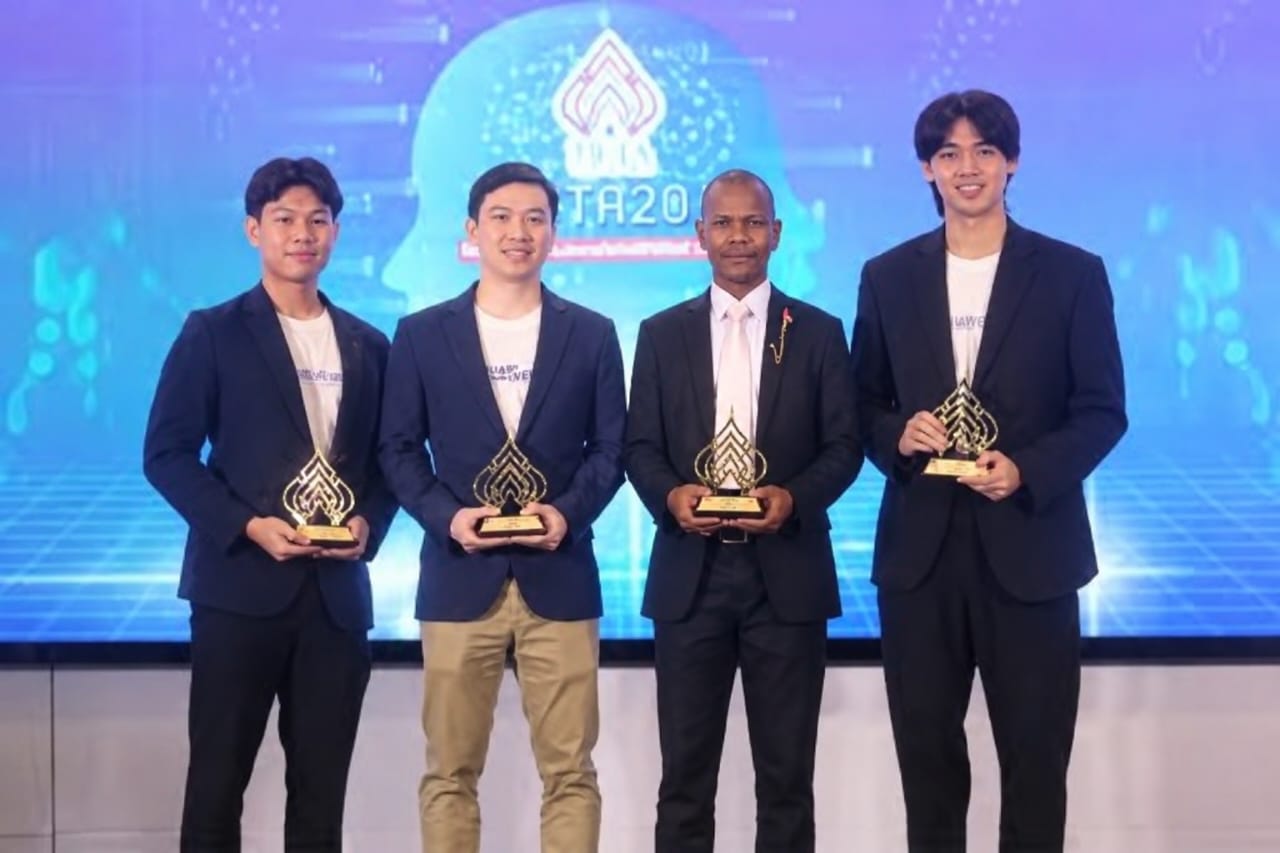
How the integration of Physics, ICT, programming and robotics is creating practical solutions to real-world challenges
Innovation in education is increasingly moving beyond textbooks and traditional classroom demonstrations. Today, learners can use technology to transform scientific principles into working solutions that address real-world challenges.
One educator and innovator demonstrating this approach is Simon Mutunga, whose work in ICT-enabled learning and technological innovation has been recognized through the Africa ICT Award 2025.
One of the projects that demonstrates this innovative approach is the Smart Obstacle-Avoidance Robot, an ICT and Physics-based autonomous system that uses ultrasonic sensors to detect obstacles and automatically change direction.
From Physics Classroom to Real-World Innovation
Physics is often taught through theories, formulas and experiments. However, its greatest value becomes visible when learners can apply those principles to solve practical problems.
The Smart Obstacle-Avoidance Robot demonstrates exactly this connection.
The project takes knowledge from Physics—particularly sound waves, reflection, distance, speed, motion, electricity and energy—and combines it with ICT, programming and electronics.
The result is a small autonomous robot capable of sensing its environment and responding to obstacles without continuous human control.
The Challenge Behind the Innovation
A moving robotic vehicle can easily collide with an object if it has no way of detecting what is ahead.
This creates a practical technological challenge:
How can a robot detect an obstacle before collision and make an automatic decision to avoid it?
Simon Mutunga’s project addresses this challenge using ultrasonic sensing and programmed decision-making.
Rather than relying on a person to control every movement, the robot is designed to sense, process information and respond automatically.
How Ultrasonic Physics Powers the Robot
At the centre of the innovation is the ultrasonic sensor.
The sensor sends out a high-frequency sound pulse. When the pulse reaches an obstacle, it is reflected back to the sensor.
The system measures the time taken for the sound to travel to the obstacle and return.
The distance can then be determined using:
Distance = (Speed of Sound × Time) ÷ 2
This simple Physics principle becomes the foundation of the robot’s obstacle-detection system.
The project therefore provides a practical demonstration of how wave reflection and measurement can be transformed into useful ICT technology.
Where ICT Comes In
Physics provides the scientific principle, but ICT gives the robot its ability to process information and make decisions.
An Arduino microcontroller receives information from the ultrasonic sensor.
The programmed system can operate according to a simple decision process:
Obstacle detected within set distance?
YES → Stop → Reverse → Turn → Continue
NO → Continue moving forward
The robot therefore follows a complete technological cycle:
SENSE → MEASURE → PROCESS → DECIDE → ACT
More Than Just a Robot
The Smart Obstacle-Avoidance Robot is more than an engineering prototype.
It represents an opportunity to integrate several areas of learning.
Physics
Learners apply:
- Sound waves
- Reflection
- Speed
- Distance
- Motion
- Force
- Electricity
- Energy
ICT
Learners explore:
- Programming
- Sensors
- Microcontrollers
- Data processing
- Automation
Engineering
Learners apply:
- Circuit construction
- Motor control
- Mechanical design
- System integration
Mathematics
Learners use:
- Measurements
- Time
- Distance
- Speed
- Data analysis
This makes the project a strong example of integrated STEM education.
Turning Invisible Physics into Something Learners Can See
One of the major educational benefits of the project is that it makes abstract Physics concepts visible.
A learner may be told that sound waves are reflected by surfaces.
With the robot, the learner can observe the practical consequence of that principle.
The learner can see that:
Sound pulse → Obstacle → Reflected pulse → Distance calculated → Robot responds
The Physics concept is no longer just something to memorize. It becomes part of a functioning system.
The Educational Challenge the Innovation Addresses
The project also addresses an important challenge in education: the gap between theoretical knowledge and practical application.
Many learners can recall scientific definitions but struggle to explain how those principles are used in real technology.
The Smart Obstacle-Avoidance Robot creates a bridge between the classroom and the real world.
Instead of simply asking learners:
What is reflection of sound?
the project allows them to explore:
How can reflection of sound be used to help a machine detect an object?
That shift encourages problem-solving, creativity, critical thinking and innovation.
Why the Project Is Relevant to ICT Education
The project demonstrates that ICT is not only about computers, internet access or digital communication.
ICT can also be used to create intelligent systems that sense their environment, process information and take action.
Through the project, learners can understand the relationship between:
Sensor → Data → Processing → Decision → Action
This is the same basic idea behind many modern technologies, including autonomous machines, smart systems and robotics.
Building the Innovators of Tomorrow
Projects such as the Smart Obstacle-Avoidance Robot demonstrate the kind of learning environment needed for the future.
A learner does not simply study Physics, ICT or Mathematics as separate subjects.
Instead, the learner learns how the subjects work together to solve a problem.
Physics explains the phenomenon.
Mathematics provides measurement and calculation.
ICT processes information.
Programming provides instructions.
Engineering turns the idea into a physical system.
Together, they create innovation.
Conclusion
The Smart Obstacle-Avoidance Robot demonstrates how scientific knowledge can move from the classroom into practical technology.
By using ultrasonic sensors, an Arduino-based control system, programming and Physics principles of sound-wave reflection and distance measurement, the project creates a robot capable of detecting obstacles and responding automatically.
For Simon Mutunga, the innovation represents more than building a machine. It demonstrates a philosophy of education in which learners are encouraged to understand, create, experiment and solve problems.
His recognition through the Africa ICT Award 2025 is therefore a reflection of the wider importance of using ICT not simply to consume information, but to create solutions for education and society.

 mbeva
mbeva