mbeva
mbeva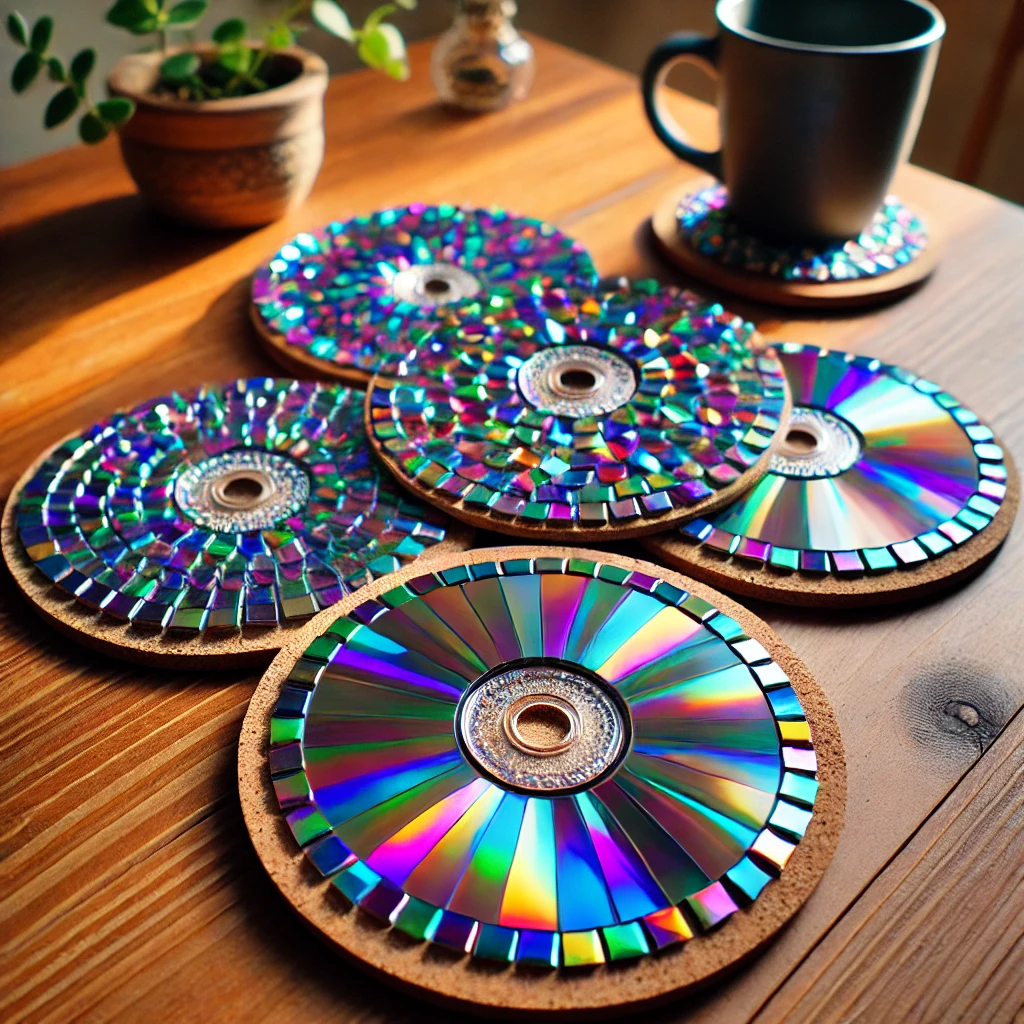
Abstract
This project explores the creative reuse of old CDs to create shiny mosaic coasters. By repurposing CDs that would otherwise contribute to e-waste, we can craft decorative and functional coasters for everyday use. This innovative upcycling idea promotes sustainability while adding a dazzling, holographic touch to home decor.
Introduction
Electronic waste is a pressing environmental issue, with old CDs and DVDs being common contributors. With their reflective surfaces and vibrant holographic layers, CDs can be creatively transformed into artistic decor items. This project demonstrates how to upcycle old CDs into mosaic coasters, reducing waste while enhancing sustainability and creativity.
Statement of the Problem
Millions of CDs and DVDs are discarded annually, contributing to non-biodegradable waste in landfills. This project addresses the challenge of reducing e-waste by repurposing CDs into aesthetically pleasing mosaic coasters, thus extending their life cycle and promoting environmental conservation.
Materials
- Old CDs or DVDs (preferably holographic)
- Corkboard or any sturdy coaster base material
- Scissors or a utility knife
- Strong adhesive glue (hot glue or craft glue)
- Acrylic sealant or clear varnish (optional, for durability)
Procedure
- Prepare the CDs
- Clean the CDs to remove dust or grime.
- Use scissors or a utility knife to cut the CDs into small, irregular pieces (approximately 1-2 cm).
- Prepare the Coaster Base
- Cut corkboard into coaster-sized shapes (e.g., circles, squares).
- Smooth the edges for a polished look.
- Arrange CD Pieces
- Lay out the CD pieces on the corkboard in a mosaic pattern, experimenting with designs before gluing.
- Glue the Mosaic
- Apply adhesive glue to the corkboard.
- Press each CD piece onto the glue, leaving small gaps between them for a mosaic effect.
- Let the glue dry completely.
- Seal the Coaster (Optional)
- Apply clear acrylic sealant or varnish over the coaster to protect it and make it waterproof.
- Allow the sealant to dry thoroughly.
Observation
During the process, the reflective CD pieces displayed vibrant holographic effects, especially when arranged in patterns. The combination of the shiny mosaic and the corkboard base resulted in a visually appealing and functional coaster.
Results
The final product was a set of shiny, durable, and lightweight coasters. The holographic design enhanced the aesthetic appeal, making the coasters suitable for use as table decor. The project successfully demonstrated the potential of upcycling CDs into functional art pieces.
Variables
- Independent Variable: The type of CD and pattern used.
- Dependent Variable: The visual appeal and durability of the coaster.
- Controlled Variables: The size of the coaster base, the glue type, and the process steps.
Conclusion
The upcycled CD mosaic coaster project highlights the potential for reducing e-waste through creative reuse. This process combines sustainability with artistry, transforming old CDs into visually appealing and functional decor. By embracing such projects, we can contribute to a greener and more sustainable